
Why is the Norwegian krone strengthening? What affects the NOK exchange rate
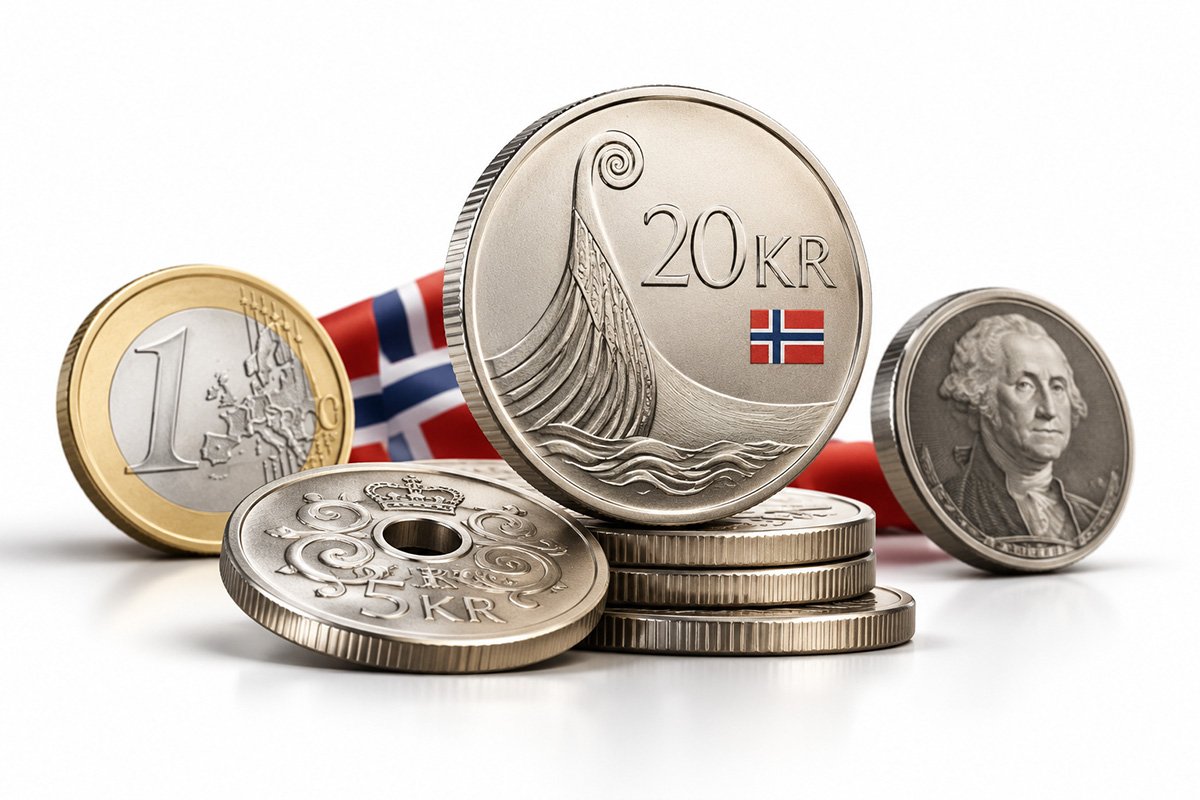
The Norwegian krone has strengthened significantly against both the euro and the US dollar. At the latest update on 29 October 2026, one euro cost around 10.34 kroner, while one US dollar cost around 9.29 kroner.
When EUR/NOK and USD/NOK fall, it means the Norwegian krone is getting stronger. But why is this happening?
There is rarely a single explanation. The NOK exchange rate is influenced at the same time by energy prices, interest rates, international markets, and how willing investors are to hold Norwegian kroner.
Oil and gas still matter a lot for the krone
Norway is one of Europe’s largest exporters of oil and natural gas. When energy prices rise, the value of Norwegian exports increases, along with revenues for both energy companies and the state.
This can increase demand for Norwegian kroner and contribute to a stronger NOK.
The relationship isn’t perfect day to day, but over longer periods, developments in the oil and gas market are still among the most important factors to watch when the krone moves sharply.
In 2026, high energy prices have been an important explanation for the krone’s strength.
High Norwegian interest rates make NOK more attractive
The interest rate differential between Norway and other countries is also important.
When Norwegian rates are high, Norwegian bonds and other investments can become more attractive to international investors. Investors who want to invest in Norway need Norwegian kroner, which can increase demand for NOK.
In September 2026, Norges Bank raised the policy rate to 4.50 percent and at the same time signalled that rates will likely need to remain at a high level for a while.
For the FX market, it’s not only about how high the rate is in Norway, but how it develops compared with rates in the euro area, the US, and other major economies.
A weaker euro can also make NOK look stronger
A falling EUR/NOK doesn’t necessarily mean the entire move is coming from Norway.
Exchange rates always consist of two currencies.
If the euro weakens due to weaker economic prospects, political uncertainty, or changing rate expectations in the euro area, EUR/NOK can fall even if conditions in Norway haven’t changed much.
The same applies to USD/NOK. A weaker dollar globally can mean a stronger krone against the dollar.
That’s why it’s useful to look at NOK against several currencies at the same time. If the krone strengthens against the euro, dollar, Swedish krona, and British pound simultaneously, the signal of broad NOK strength is much clearer.
Market sentiment and momentum can amplify the move
The Norwegian krone is a relatively small currency compared with the euro and the US dollar. That means large capital flows can have a relatively big impact on the exchange rate.
Once a clear trend emerges, funds, algorithmic trading strategies, and other market participants may start following the same direction.
This can amplify an ongoing strengthening.
At the same time, NOK has historically been sensitive to global risk appetite. If investors suddenly become more cautious and move into large or traditionally safer currencies, the krone can weaken quickly again.
What could make the krone weaken again?
A stronger krone is therefore not necessarily the start of a permanent trend.
Some of the most important factors to watch are:
- oil and gas prices
- interest rate decisions from Norges Bank
- interest rates in the US and the euro area
- Norwegian inflation and economic growth
- developments in the euro and the US dollar
- global risk appetite and financial markets
- geopolitics and energy supply
A sharp drop in oil and gas prices, for example, could remove one of the most important supports the krone has had. Lower Norwegian rates relative to other countries could do the same.
What does a stronger krone mean for Norwegians?
For Norwegian households, a stronger krone has several direct consequences.
Foreign travel becomes cheaper in Norwegian kroner, and goods Norway imports may cost less. A stronger krone can therefore also contribute to lower inflation over time.
For Norwegian exporters, the effect is more mixed. Revenues in euros or dollars become worth less when converted into NOK if the krone strengthens.
A stronger krone can also make Norges Bank’s job a bit easier because cheaper imports help curb price growth.
Our view: follow the drivers, not just the exchange rate
What matters isn’t only whether EUR/NOK is at 10.30, 10.70, or 11.00.
The most important thing is why the exchange rate is there.
As long as high energy prices, relatively high Norwegian interest rates, and favourable market conditions are pulling in the same direction, there is support for the krone. But several of these factors can change quickly.
That’s why a new record level or a sharp NOK move should always be assessed alongside oil and gas prices, the interest rate outlook, and developments in international financial markets.
This page is updated when there are material changes in the NOK exchange rate or the factors that influence it.